Buying a house in Portugal with mortgage credit is a perfectly accessible reality for those living outside the country. However, for non-resident buyers, the financing process presents specific rules, criteria, and requirements that should be known from the start. Adequate preparation can make all the difference between a simple and predictable process and a journey marked by delays, surprises, and unexpected difficulties.
From the amount that banks are willing to finance to the required documentation, including the analysis of income earned abroad, understanding each step in advance allows for more informed decisions and progress in buying a property in Portugal with greater security.
How Much Can Banks Finance for Non-Residents?
The available financing depends on several factors, including the bank, the buyer's financial profile, the country of residence, the currency in which they earn their income, and the purpose of the property.
Generally, Portuguese banks tend to be more conservative in financing granted to non-residents. It is common to find financing solutions between 65% and 80% of the property's purchase or valuation price, depending on the specific conditions of the process.
In practice, this means that the buyer should be prepared to secure a significant part of the investment through their own funds. The down payment can often be between 20% and 35% of the property's value, to which taxes, notary fees, and other acquisition costs are added.
For this reason, knowing your financing capacity in advance is one of the first steps in defining a realistic budget and starting the property search with greater security.
Documentation Usually Required
Although the documents may vary depending on the financial institution and the buyer's country of residence, there are some elements that are commonly requested in the credit analysis process:
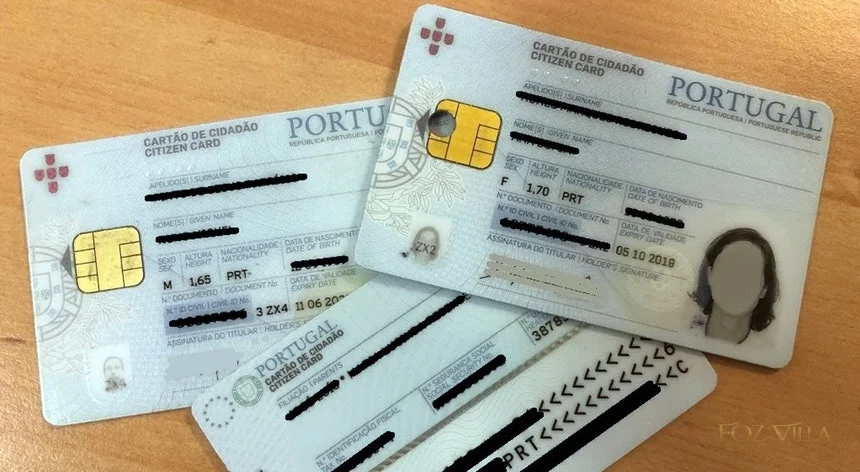
- Portuguese NIF — the Tax Identification Number is essential for carrying out various operations in Portugal and is usually necessary to proceed with the purchase and financing process.
- Proof of income — may include pay slips, tax returns from the country of residence, employment contracts, or other documents that prove financial stability.
- Bank statements — usually related to the last few months, allowing the bank to analyze financial movements and the ability to meet assumed responsibilities.
- Proof of address — issued in the country of residence.
- Valid identification document — such as an identity card, passport, or equivalent document.
- Information on credit responsibilities — when available in the country of residence or origin.
It is essential to gather this documentation in a timely manner. A well-prepared process can reduce delays and allow for a faster and more efficient credit analysis.
Fixed, Variable, or Mixed Rate?
Portuguese banks offer different interest rate solutions, allowing the buyer to choose a financing structure that best suits their financial profile and risk tolerance level.
The variable rate is usually associated with an index, such as the Euribor, plus the spread defined by the bank. The installment can, therefore, vary over time.
The fixed rate allows for a stable installment during the contracted period, offering greater predictability in financial planning.
There is also the mixed rate, which combines an initial fixed-rate period with a subsequent variable-rate phase.
For international buyers, the choice should be analyzed with special attention, considering the expected duration of the financing, available income, and the currency in which that income is received.
The Exchange Risk: A Factor Not to Be Ignored
When the buyer's income is received in a currency different from the euro, there is an additional factor to consider: the exchange risk.
If the income is earned in pounds, dollars, Swiss francs, or crowns, but the loan installment is paid in euros, an unfavorable exchange rate variation can increase the actual cost of the financing.
For this reason, it is crucial to carefully analyze the impact of possible exchange rate fluctuations and maintain an adequate financial margin in the monthly budget.
What Are the Main Steps?
Although each process may have different characteristics, the usual path for a non-resident buyer involves several stages:
- Obtain the Portuguese NIF and prepare the necessary documentation.
- Analyze financial capacity and request a credit simulation.
- Obtain pre-approval or an indication of financing, whenever possible.
- Define a realistic budget, considering the down payment and additional acquisition costs.
- Find the suitable property according to needs and investment profile.
- Proceed with the bank's evaluation of the chosen property.
- Obtain final credit approval and prepare the contractual documentation.
- Sign the promissory purchase and sale agreement, when applicable.
- Conclude the deed and formalize the acquisition of the property.
HAVING a pre-approval or a clear indication of financing capacity before starting the search can represent a significant advantage. In addition to avoiding the analysis of properties above the real budget, it allows the buyer to act with greater confidence when finding the right property.
Buying in Portugal from a Distance, with Local Accompaniment
For those living abroad, buying a property in Portugal can seem like a complex process. The distance, documentation, financing, and the need to coordinate different entities make it especially important to have professional accompaniment.
At FOZ VILLA, we accompany national and international buyers throughout the entire acquisition process, from identifying needs and selecting properties to articulating with specialized partners in mortgage credit, evaluation, documentation, and concluding the purchase.
Our goal is to make the process clearer, safer, and more efficient, allowing each buyer to invest in Portugal with greater confidence — even when they are thousands of kilometers away.